The global construction machinery market in 2026 is no longer defined solely by the weight of steel or the power of the motor. Instead, software, sensors, and artificial intelligence have become the primary drivers of value. When discussing the concrete plant price, it is essential to distinguish between the physical structure and the “brain” of the machine. As automation levels climb from basic manual controls to fully autonomous, IoT-integrated systems, the price point naturally shifts. However, this shift is not merely an added expense; it is a calculated investment in the longevity and profitability of a construction enterprise.
The Drivers of Increasing Concrete Plant Price
Several factors contribute to the price hikes seen in 2026. Primarily, the cost of high-end electronic components—such as advanced PLCs (Programmable Logic Controllers), high-precision load cells, and laser-based moisture sensors—has added a premium to the manufacturing process. While a standard mechanical plant may have a stable price floor, the integration of these smart components can increase the overall concrete plant price(planta de hormigón precio) by 20% to 40%.
Supply Chain and Specialized Technology
The move toward automation requires specialized labor for installation and calibration. In the current market, manufacturers are not just selling mixers; they are selling data management systems. This transition means that the initial acquisition cost includes software licenses and cloud integration fees, which ensure that the plant can communicate with the main office in real-time. Furthermore, global logistics costs for high-tech components have remained volatile, further pushing the price of premium, fully automated units upward.
Market Spotlight: Concrete Batching Plant Peru
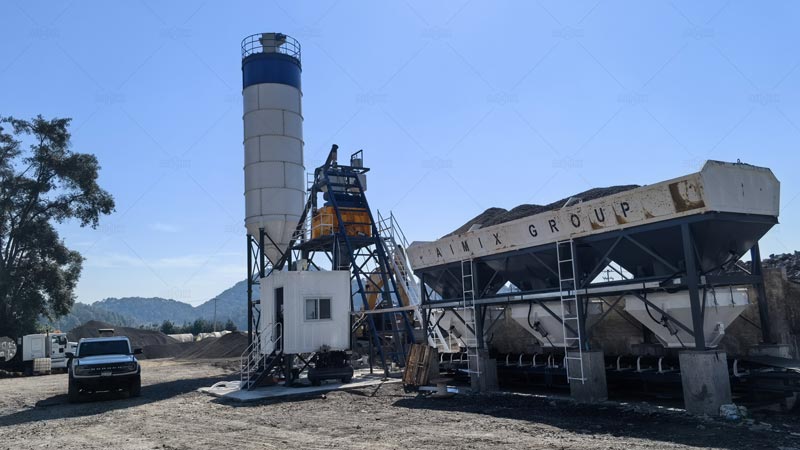
The South American region has become a fascinating case study for these price dynamics. In the search for a reliable concrete batching plant Peru(planta dosificadora de concreto Perú) based developers are finding that the local market is increasingly rejecting low-tech, manual options. The reason lies in the demanding terrain and the high quality standards required for Peruvian seismic-resistant construction.
Investors in Peru are realizing that while the initial concrete plant price for an automated unit is higher, it mitigates the high cost of specialized labor in remote mining and urban project sites. The “Peru model” demonstrates that in developing infrastructure markets, automation is a hedge against human error and material waste, which are far more costly than the upfront machinery premium.
Developments in Chile: Precision and Sustainability
Further south, the landscape for concrete plants in Chile is being shaped by strict environmental regulations. Chilean authorities have introduced rigorous standards regarding dust emissions and water recycling in concrete production. To meet these standards, automation is mandatory. Automated systems can precisely control the dust extraction and water recycling loops, tasks that are nearly impossible to manage manually with consistency.
Consequently, the price for concrete plants in Chile often includes integrated environmental protection systems. While this increases the entry price, it avoids the massive fines associated with non-compliance and allows companies to bid on government “green” contracts that are closed to those with older, manual equipment.
The Rise of the Automated Small Concrete Plant
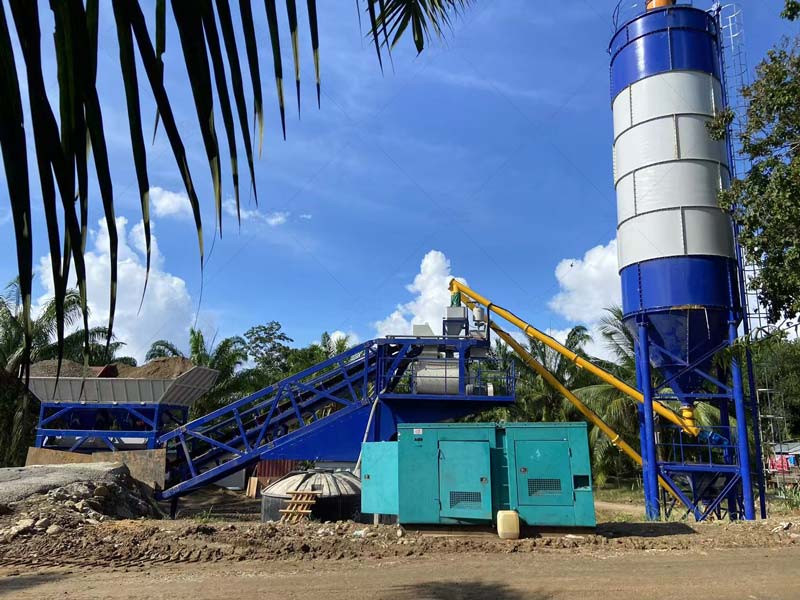
One might assume that automation is only for massive, stationary plants. However, the 2026 market has seen a surge in the automated small concrete plant. These units, often ranging from 25 to 50 cubic meters per hour, are the “Swiss Army Knives” of the construction world. By automating a small concrete plant, contractors can achieve the same precision as a 120m³/h plant but with a fraction of the footprint and labor.
Efficiency in Compact Spaces
For rural development or urban infill projects, these small plants(estas plantas de concreto pequeñas) are invaluable. Automation allows for “batch-on-demand” capabilities, reducing the need for large fleets of transit mixers. This efficiency significantly lowers the barrier to entry for smaller firms, even if the per-unit concrete plant price is higher due to the smart tech inside.
Calculating the Returns: ROI of Automation
The returns on automation are reflected in three primary areas: material savings, labor reduction, and quality consistency.
1. Optimization of Raw Materials
Cement is the most expensive ingredient in concrete. Manual batching often involves a “safety margin” where operators add extra cement to ensure the mix meets strength requirements. Automated systems, using real-time data, eliminate this 2-5% “over-batching” error. Over a year of production, these savings can equal $30,000 to $100,000, effectively paying for the automation upgrade in the first year alone.
2. Reducing the Labor Burden
A manual plant requires a crew of five or more to manage loading, mixing, and monitoring. A fully automated plant can be operated by a single person via a mobile interface. In regions with rising labor costs, this reduction in headcount transforms the plant’s operational budget, allowing for a much faster payback period on the initial concrete plant price.
3. Consistency and Reduced Rework
One bad batch of concrete can halt a project and lead to expensive demolition and legal disputes. Automation ensures that every batch is identical to the last. This reliability is the “hidden return” that doesn’t always appear on a balance sheet but determines the long-term reputation of a concrete supplier.
Comparison Table: Manual vs. Automated Performance
| Metric | Manual/Low-Level | Fully Automated (2026 Standard) |
|---|---|---|
| Initial Investment | Lower (Baseline) | 25% – 40% Higher |
| Batch Precision | +/- 5% Variance | +/- 1% Variance |
| Labor Requirement | High (4-6 persons) | Low (1-2 persons) |
| Material Waste | Significant (4% Avg) | Minimal (<1% Avg) |
| Estimated ROI Period | 36+ Months | 12-18 Months |
Conclusion: A Strategic Investment for 2026
As we look toward the future of construction in South America and beyond, the trend is clear: the initial concrete plant price is only one part of the equation. Whether you are investing in a concrete batching plant Peru to tackle mountain infrastructure or deploying concrete plants in Chile(despliegue de plantas hormigoneras en Chile) to meet sustainability goals, automation is the key to unlocking profitability. Even a small concrete plant, when equipped with modern “smart” controls, becomes a high-margin asset that far outstrips the performance of its manual predecessors. In 2026, the question is no longer whether you can afford to automate, but whether you can afford not to.