The South African housing market is under pressure. Developers face a persistent shortage of affordable homes. The government has set ambitious targets for social housing. Private developers are racing to complete estates in Gauteng, the Western Cape, and KwaZulu-Natal. The bottleneck is often concrete. Foundations, floors, and retaining walls require large volumes of concrete delivered on tight schedules. The traditional model of ready-mix truck delivery is struggling to keep pace. The self-loading mixer paired with a concrete pump offers a higher-output alternative. This article analyses the productivity gains achievable with this equipment combination. The analysis is based on cycle times, labour requirements, and material flow. The conclusion is that the self loading cement mixer and pump can double the concrete placement rate compared to conventional methods.
Cycle Time Analysis: From Batch to Placement
The Ready-Mix Cycle
The conventional ready-mix cycle begins with an order. The supplier dispatches a truck from a central plant. The truck travels to the site. The delivery may be 30 to 90 minutes depending on distance and traffic. The truck discharges into a wheelbarrow or concrete pumps for sale in south africa. The discharge time is 30 to 60 minutes for a 6 cubic metre load. The truck returns to the plant. The cycle time from order to completion of discharge is typically 2 to 4 hours. The developer pays for the concrete and the truck time. The placement rate is limited by the truck arrival frequency. A typical housing development may receive 10 to 15 trucks per day. The total daily volume is 60 to 90 cubic metres. This is insufficient for high-output housing projects requiring 200 cubic metres or more per day.
The Self-Loading Mixer and Pump Cycle
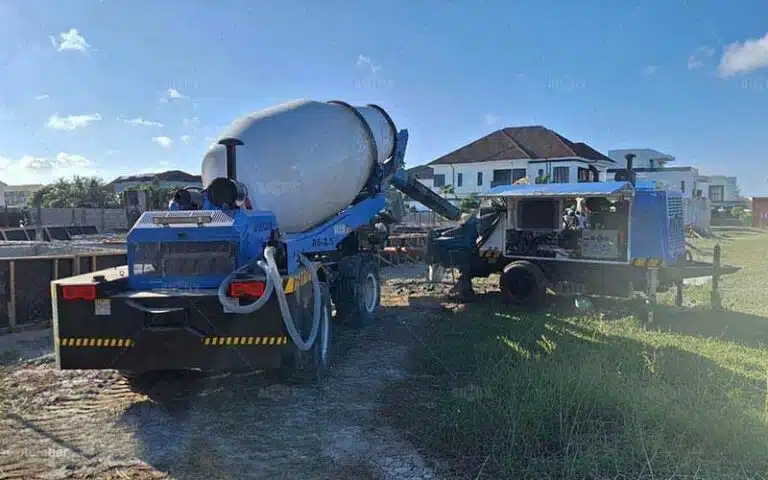
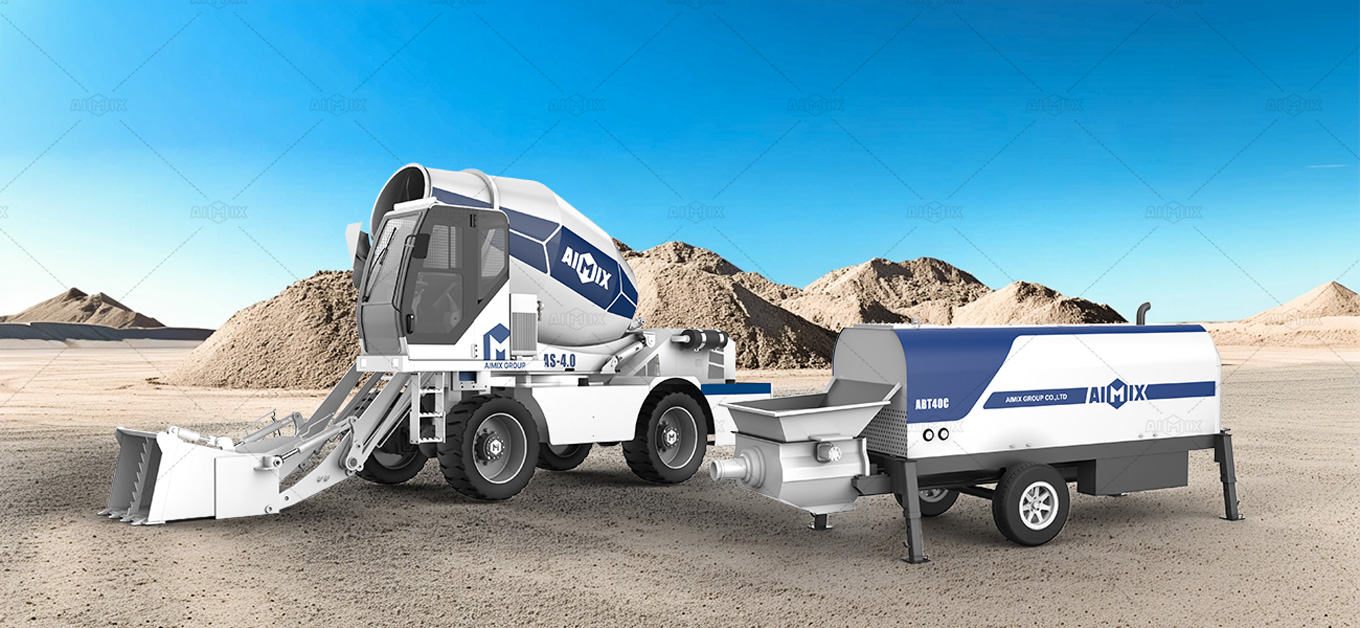
The self-loading mixer carries its own materials. The operator loads the machine in 5 to 10 minutes. The machine travels to the pour point. The mixing cycle begins. The operator adds water and starts the drum. The mix is ready in 3 to 5 minutes. The concrete discharges into the pump hopper. The pump pushes the concrete through the hose to the formwork. The discharge rate is 10 to 20 cubic metres per hour. The operator can produce batch after batch without waiting for a truck. The cycle time from loading to placement for a 2 cubic metre batch is 15 to 20 minutes. The daily output for an 8-hour shift is 40 to 80 cubic metres. Two machines operating in parallel can achieve 80 to 160 cubic metres per day. This output matches the demands of high-output housing developments.
Labour Efficiency: Reducing the Crew Size
Manual Handling vs. Pumped Placement
The conventional method of placing concrete from a ready-mix truck involves manual handling. The concrete is discharged into a wheelbarrow. The wheelbarrow is pushed to the formwork. The concrete is dumped. The wheelbarrow returns. This process requires a crew of 5 to 8 labourers. The labourers tire as the day progresses. The placement rate declines. The risk of injury increases. The concrete pump and self loading concrete mixer for sale south africa eliminate manual handling. The hose is placed directly over the formwork. The operator controls the flow from the pump. The concrete flows into the forms without lifting or pushing. The crew required is 2 to 3 labourers. One spreads the concrete. One vibrates it. One finishes the surface. The reduction in labour is 50 to 60 percent. The labour saving improves the project margin.
Training and Skill Requirements
The self-loading mixer requires a trained operator. The pump requires a trained operator. These are not unskilled positions. The investment in training is significant. The return is also significant. A skilled operator can produce consistent concrete. They can adjust the mix for changing conditions. They can troubleshoot pump blockages. The argument is that the labour saving and productivity gain justify the training cost. A housing developer using conventional methods may require 8 labourers and 2 truck drivers to place 100 cubic metres per day. The same developer using a self-loading mixer and pump may require 2 operators and 3 labourers. The labour cost per cubic metre is reduced by 50 to 70 percent. The training cost is amortised over the project. The net effect is positive.
Material Flow and Logistics
On-Site Material Storage
The self-loading mixer requires aggregates and cement on site. The developer must provide a stockpile area. The aggregates should be stored on a hardstanding surface to prevent contamination. The cement silo or bagged cement storage must be protected from moisture. The argument is that on-site stockpiling shifts the logistics burden from the ready-mix supplier to the developer. The developer gains control over the supply chain. The risk of delivery delays is transferred. The developer must also manage the inventory. Running out of aggregates stops production. The benefit of control comes with the responsibility of inventory management.
Waste Reduction
The conventional ready-mix model generates waste. The truck may have leftover concrete. The leftover must be dumped. The material is wasted. The developer pays for it. The self-loading mixer produces only the volume required. The operator can stop the batch mid-cycle if the formwork is full. The unused dry materials are returned to the stockpile. There is no waste. The argument is that waste reduction is both an environmental benefit and a cost saving. In high-output housing developments, where thousands of cubic metres of concrete are placed, the waste saving can be substantial. A waste reduction of 2 percent on 10,000 cubic metres saves 200 cubic metres of concrete. At a material cost of $50 per cubic metre, the saving is $10,000. The self-loading mixer contributes directly to the bottom line.
The analytical conclusion is that the self-loading mixer and stationary concrete pump pair offers significant productivity advantages for high-output South African housing developments. The cycle time is shorter than ready-mix delivery. The labour requirement is lower. The material flow is under the developer’s control. The waste is reduced. The capital cost of the equipment is substantial. The operating cost is lower per cubic metre. The developer who adopts this technology will complete projects faster and at lower cost. The competitive advantage is clear.