Setting up a ready mix concrete plant in Singapore requires careful consideration of equipment investment, site conditions, production capacity, logistics, and operating costs. Although Singapore has a highly developed construction sector, limited industrial land, high construction demand, and tropical weather conditions can all influence the overall investment. For investors evaluating a ready mix plant Singapore project, the most suitable solution is not necessarily the largest plant, but one that matches concrete demand, available space, project duration, and delivery requirements.
How Project Scale Affects Ready Mix Concrete Plant Setup Cost
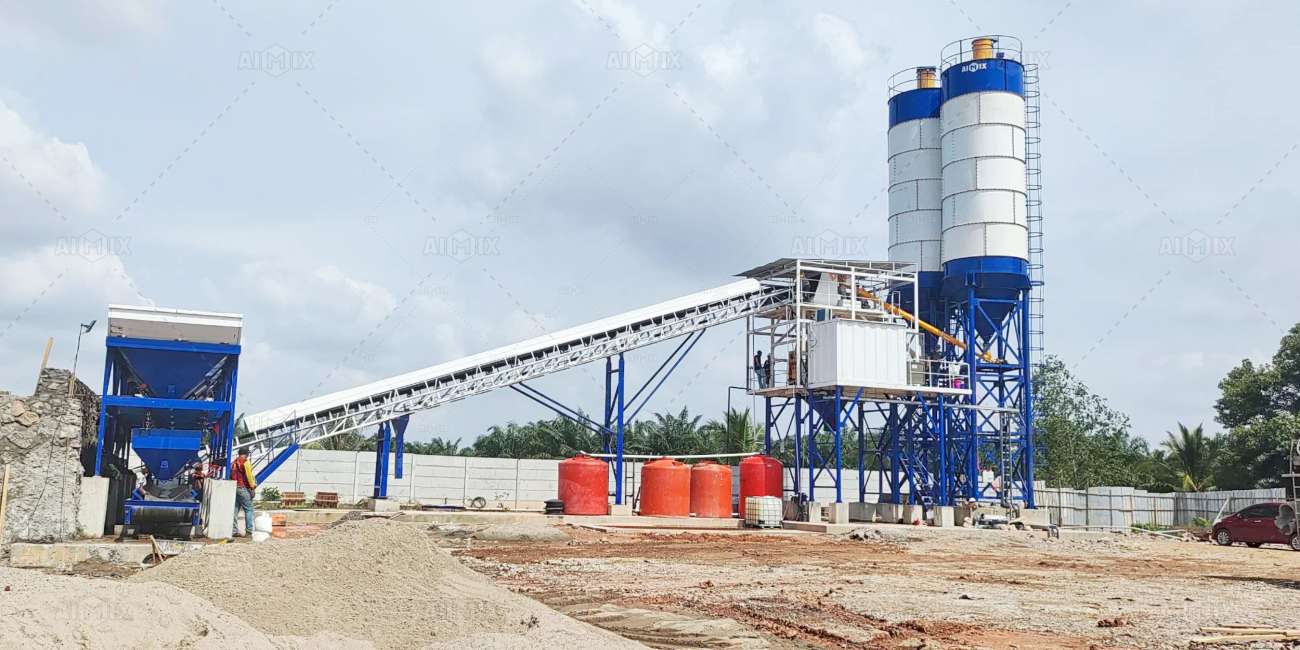
Project scale is one of the most important factors affecting ready mix concrete plant setup cost. A small contractor supplying several building projects has different requirements from a commercial ready-mix supplier serving multiple construction sites. The difference affects plant capacity, mixer size, aggregate storage, cement silo capacity, automation, and concrete delivery equipment.
For relatively small projects, a compact batching plant can reduce the initial equipment investment and make better use of limited space. Larger commercial operations may require higher-capacity batching systems, multiple cement silos, larger aggregate storage, automated control systems, and additional concrete mixer trucks. Although these systems increase initial investment, they can provide the production capacity needed for continuous commercial supply.
Investors should therefore determine expected hourly and daily concrete demand before selecting equipment. Choosing excessive capacity can result in unnecessary capital expenditure, while insufficient capacity may create production bottlenecks and limit the plant’s ability to serve multiple projects.
How Singapore’s Climate Affects Plant Investment
Singapore has a tropical climate characterized by high temperatures, high humidity, and frequent rainfall. These conditions should be considered when selecting and configuring batching plant equipment. Moisture can affect aggregate storage and handling, while persistent humidity makes suitable protection for electrical components, control systems, and other equipment particularly important.
Aggregate storage should be designed to maintain stable material quality and feeding performance. Proper drainage is also important because heavy rainfall can affect stockpiles, access roads, and material handling areas. Water management should therefore be considered during the site layout stage rather than treated as an additional issue after installation.
For a ready mix plant Singapore project, climate-adapted equipment and appropriate site planning can help maintain stable production. The investment required for protective structures, drainage, electrical protection, and suitable material storage should be included when estimating the total setup cost.
How Land Availability and Site Layout Affect Investment
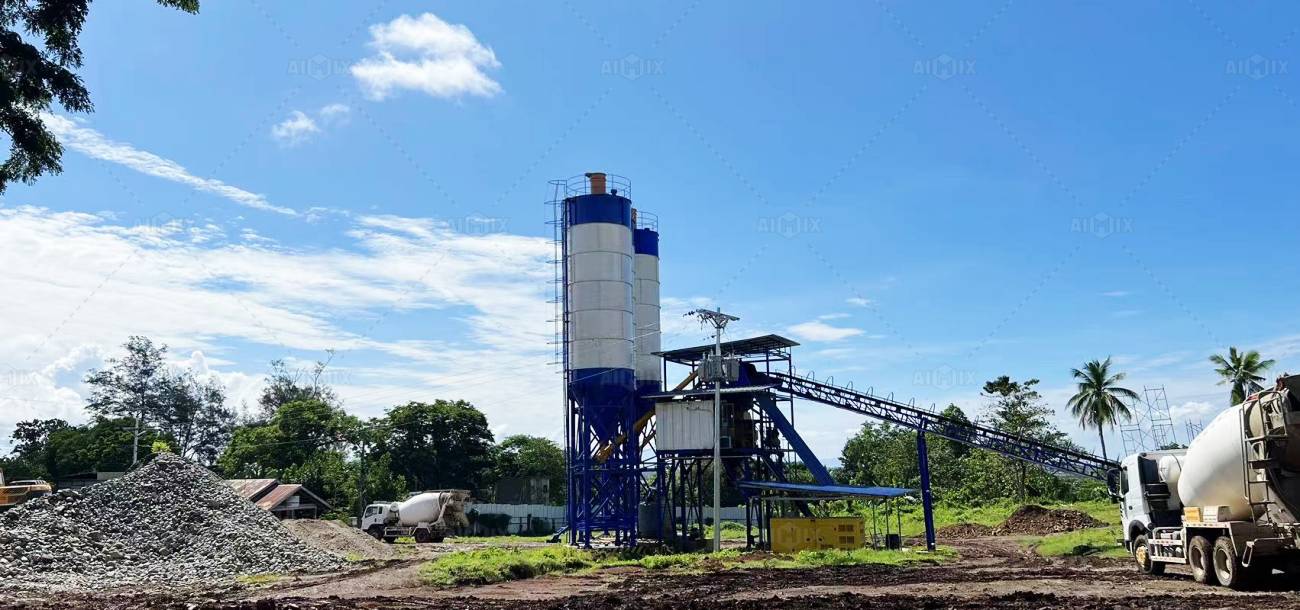
Land availability is another important consideration when establishing a concrete batching plant in Singapore. A batching plant requires space not only for the main production equipment but also for aggregate storage, cement silos, concrete mixer truck access, internal traffic, maintenance, and safe operation.
A compact plant layout can provide significant value when the available site is restricted. Equipment with an integrated structure or optimized arrangement can reduce the required footprint while maintaining the necessary batching and mixing functions. This can be especially useful for construction projects where the plant needs to operate within a temporary or tightly planned site.
The plant layout should also minimize unnecessary material movement. Aggregate should move efficiently from storage to the batching system, while cement, water, and admixtures should be delivered through appropriately arranged systems. A well-planned layout can reduce material handling requirements and improve operational efficiency.
How Equipment Configuration Determines Setup Cost
The main equipment investment normally includes aggregate bins, feeding equipment, a concrete mixer, cement silos, screw conveyors, weighing systems, water and admixture systems, electrical equipment, and an automated control system. The final cost depends heavily on the configuration and production capacity selected.
Mixer selection is particularly important because it affects mixing efficiency, batch size, and production cycle time. For commercial ready-mix operations, a twin-shaft mixer can provide efficient and consistent mixing for continuous production. The aggregate batching system and cement storage capacity should also be matched with the expected production volume.
Automation can influence the initial investment as well. A more advanced control system may increase equipment cost, but accurate weighing and automated batching can improve consistency, reduce material waste, and simplify operation. Investors should therefore evaluate equipment based on total operating value rather than focusing exclusively on the lowest purchase price.
What a Ready Mix Concrete Plant Business Plan Should Include
A detailed ready mix concrete plant business plan should cover both capital investment and ongoing operating expenses. Equipment is only one part of the total project budget. Investors should also consider site preparation, installation, transportation, electrical work, labor, maintenance, spare parts, raw materials, environmental measures, and concrete delivery.
The business plan should estimate expected concrete sales volume and identify the main customer groups. These may include building contractors, infrastructure projects, commercial developments, and other construction companies. Expected delivery distances should also be evaluated because ready-mix concrete requires efficient transportation to maintain delivery schedules and concrete quality.
A realistic financial model should compare expected concrete selling prices with raw material, production, labor, transportation, and maintenance costs. This helps investors determine the required production volume and estimate how long it may take to recover the initial investment.
How Transportation Requirements Influence Total Investment
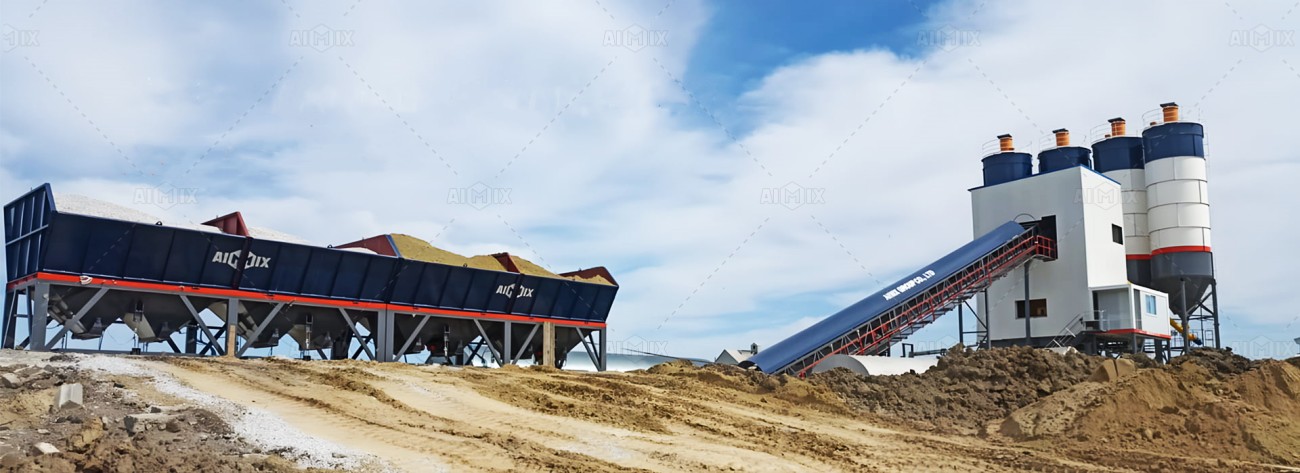
For a ready-mix operation, logistics continue to affect costs after the batching plant has been installed. Concrete must be transported from the plant to construction sites using mixer trucks, making plant location and delivery routes important factors in business planning.
A plant located closer to major project areas may reduce transportation time and improve delivery efficiency. However, a more strategically located site may involve higher land or facility costs. Investors therefore need to balance site expenses against potential savings in concrete transportation and improved delivery efficiency.
The number of mixer trucks is another investment consideration. A high-capacity batching plant without sufficient delivery vehicles may not achieve its potential output. Conversely, purchasing too many trucks before demand is established can increase idle equipment and operating costs.
How to Choose Reliable Ready Mix Concrete Plant Suppliers
Selecting experienced ready mix concrete plant suppliers is important when planning a project in Singapore. Suppliers should be evaluated based on equipment configuration, production capacity, installation support, automation, spare parts availability, and technical service.
A capable supplier should be able to adapt the plant configuration to the available site and project requirements rather than offering only a standardized package. This is particularly important when land is limited or when the plant needs to meet specific transportation and production requirements.
Investors should compare complete quotations instead of comparing the headline equipment price alone. Installation, transportation, commissioning, control systems, spare parts, and after-sales support can all influence the actual cost of establishing and operating the plant.
How to Control Ready Mix Concrete Plant Setup Cost
Controlling investment does not necessarily mean selecting the cheapest equipment. A better approach is to optimize the plant according to actual production requirements. Investors can reduce unnecessary costs by selecting appropriate capacity, avoiding excessive storage capacity, optimizing the site layout, and choosing equipment that balances initial investment with long-term operating efficiency.
For projects with uncertain duration or changing locations, a mobile or compact configuration may also be worth considering. For long-term commercial production, a stationary plant may provide better value because the equipment can be designed around a permanent production and delivery system.
Conclusion
The ready mix concrete plant setup cost in Singapore is influenced by project scale, climate, site availability, equipment configuration, logistics, and long-term operating requirements. High humidity and frequent rainfall make suitable material storage, drainage, and equipment protection important considerations, while limited space makes compact and efficiently arranged plants particularly valuable.
A practical ready mix concrete plant business plan should evaluate equipment investment together with production demand, delivery costs, operating expenses, and expected revenue. By working with experienced ready mix concrete plant suppliers and selecting a configuration based on actual project requirements, investors can build a more efficient and economically sustainable ready-mix concrete production system.