Port Klang is one of Malaysia’s busiest logistics and industrial areas, with warehouses, distribution centres, container yards, and supporting infrastructure operating around a demanding transport network. Construction and expansion projects in this region often involve large floor slabs, loading bays, equipment foundations, drainage channels, and pavement sections. These structures require concrete to be delivered and placed efficiently, sometimes across extensive sites where ready-mix truck access is restricted. A trailer concrete pump for sale provides a practical solution by transferring concrete through pipelines from a mixer truck or batching facility to the designated pouring location.
For contractors working around Port Klang, selecting a suitable pump involves more than checking its rated output. Pipeline distance, concrete mix properties, floor thickness, reinforcement density, site access, and daily pouring volume all influence pumping performance. A properly configured trailer pump can support different stages of warehouse construction without requiring a separate pumping system for every application. Understanding where it fits into loading bay construction, container yard paving, and drainage works helps contractors plan equipment deployment and maintain a more predictable concrete placement schedule.
Concrete Placement Requirements in Port Klang Industrial Projects
Different Structures Require Different Pumping Arrangements
Warehouse construction involves several concrete applications, each with distinct placement conditions. Floor slabs usually require substantial volumes delivered across broad working areas. Loading bays involve reinforced sections, dock levellers, ramps, and retaining structures. Container yards require durable pavement capable of handling repeated heavy vehicle and container movements, while drainage systems involve narrower channels and foundations.
The proximity of logistics operations can also complicate construction. Existing warehouses, container storage areas, internal roads, and vehicle circulation routes may restrict the positioning of concrete mixer trucks. Contractors therefore need a pumping arrangement that can transfer concrete from an accessible unloading point to work areas beyond the immediate reach of delivery vehicles.
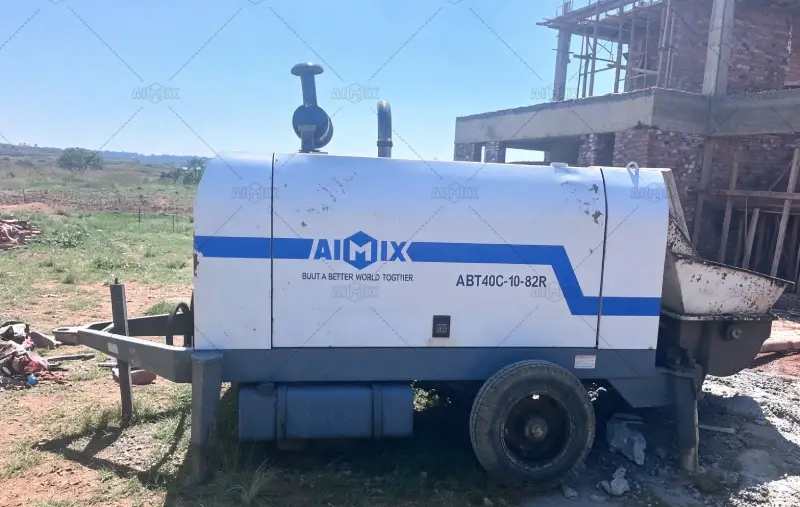
Using Trailer Concrete Pumps for Warehouse Floor Construction
Supporting Large Slab Pours
Warehouse floors are commonly designed to withstand forklift traffic, pallet racking loads, storage equipment, and other operational stresses. Their construction requires careful control of slab thickness, reinforcement placement, concrete consistency, and finishing schedules.
A trailer pump can deliver concrete through a pipeline distributed along the floor area. Instead of requiring mixer trucks to travel directly across the prepared slab formation, concrete can be pumped from a designated delivery point. This arrangement helps reduce vehicle interference with reinforcement, formwork, and other site preparations.
For contractors evaluating a concrete trailer pump for sale, the key consideration is whether its actual pumping output can keep pace with the planned slab placement rate. Pumping capacity should be coordinated with the available mixer trucks, finishing crew, and concrete supply schedule.
Managing Reinforcement and Placement Conditions
Some warehouse floors incorporate steel reinforcement, thickened slab sections, or localised foundations beneath heavy equipment. These areas require concrete to be distributed carefully without displacing reinforcement or creating excessive interruptions during placement.
The pump’s maximum aggregate size and pipeline diameter must be compatible with the approved concrete mix. A suitable slump and consistent aggregate grading also help reduce the likelihood of blockage. Contractors should confirm these parameters before pumping begins.
Pumping Concrete for Loading Bays and Equipment Foundations
Loading Docks and Vehicle Access Areas
Loading bays connect warehouse operations with trucks, trailers, and material-handling equipment. Their concrete structures may include dock aprons, ramps, retaining walls, edge beams, and reinforced platforms.
These areas can be difficult to serve with direct discharge when formwork, parked machinery, or adjacent structures limit truck access. A trailer pump allows the delivery point to remain in a more accessible location while pipelines extend towards the required placement area.
For projects comparing a concrete pump for sale in Malaysia, pumping distance and the ability to handle the specified concrete mixture should be considered alongside rated output. A higher theoretical capacity does not necessarily provide better performance if the pipeline layout or concrete supply cannot support it.
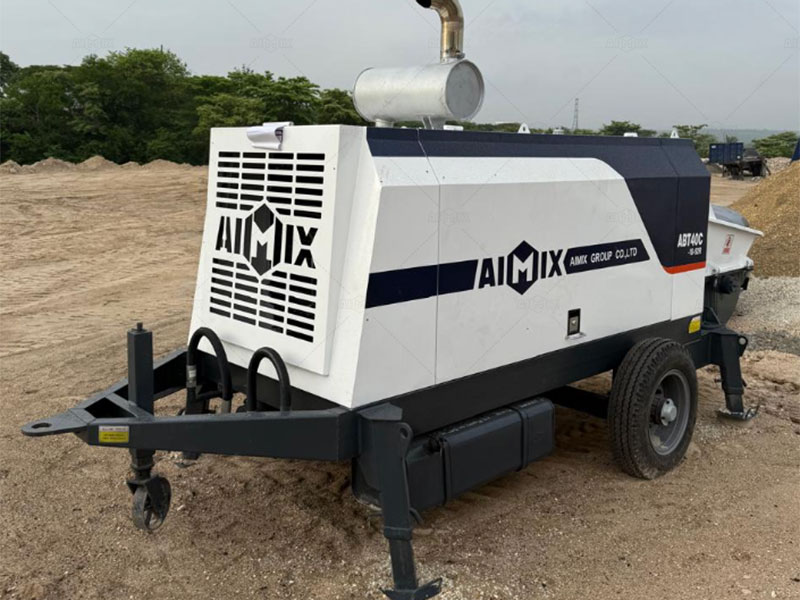
Equipment Bases and Industrial Foundations
Industrial warehouses may require concrete foundations for generators, compressors, conveyor systems, storage tanks, and other fixed equipment. These bases often contain dense reinforcement, anchor bolts, embedded plates, and carefully positioned service conduits.
A trailer pump can help place concrete around these components, provided the delivery hose can reach the required sections and the concrete mixture is suitable for pumping. Placement teams should work systematically to avoid segregation, trapped air, and incomplete filling around embedded components.
Concrete Pumping for Container Yard Pavements and Drainage Systems
Container Yard Pavement Construction
Container yards experience substantial loading from container-handling equipment, loaded trailers, and repeated heavy vehicle movements. Concrete pavement design must account for these operational loads, subgrade conditions, joint layouts, and drainage requirements.
Large outdoor paving areas may have limited access for concrete mixer trucks once subgrade preparation, reinforcement, or other construction activities are underway. A stationary concrete pump for sale can deliver concrete through extended pipelines to selected placement zones, helping contractors organise pouring operations around vehicle routes and active work areas.
However, pipeline routing must be planned to minimise sharp bends, excessive length, and unnecessary elevation changes. These factors influence pumping resistance and the practical output achievable on site.
Drainage Channels and Utility Structures
Port Klang industrial developments also require surface drains, culverts, inspection chambers, and underground utility structures to manage rainwater and site runoff. Malaysia’s tropical rainfall makes effective drainage particularly important for warehouse yards and access roads.
Some drainage sections are narrow or positioned beside existing structures, making direct concrete discharge difficult. A pump with a suitable delivery hose can place concrete into these restricted areas with less dependence on vehicle access.
How to Select a Suitable Trailer Concrete Pump
Match Pump Capacity with Actual Site Demand
The required pump output depends on daily concrete volume, pouring duration, pipeline length, and the number of active work zones. Contractors should estimate the expected hourly placement rate rather than selecting equipment based only on its maximum rated capacity.
The following factors provide a practical starting point:
| Selection factor | What contractors should check |
|---|---|
| Pumping output | Required hourly concrete volume and pouring schedule |
| Pipeline distance | Horizontal length, vertical height, and number of bends |
| Concrete mixture | Aggregate size, slump, cement content, and pumpability |
| Site access | Equipment positioning, truck access, and pipeline routes |
| Power configuration | Diesel or electric operation and available site utilities |
Consider Mobility and Installation Requirements
A stationary concrete pump in Malaysia may suit projects with a stable pumping location and recurring high-volume concrete placement. A trailer-mounted configuration offers greater flexibility when the pump needs to be repositioned between warehouse blocks, loading areas, and infrastructure sections.
A mobile concrete pump in Malaysia may also be considered for projects requiring frequent equipment deployment across multiple sites. Contractors should compare transportation arrangements, setup time, maintenance access, and the availability of suitable pipelines before making a decision.
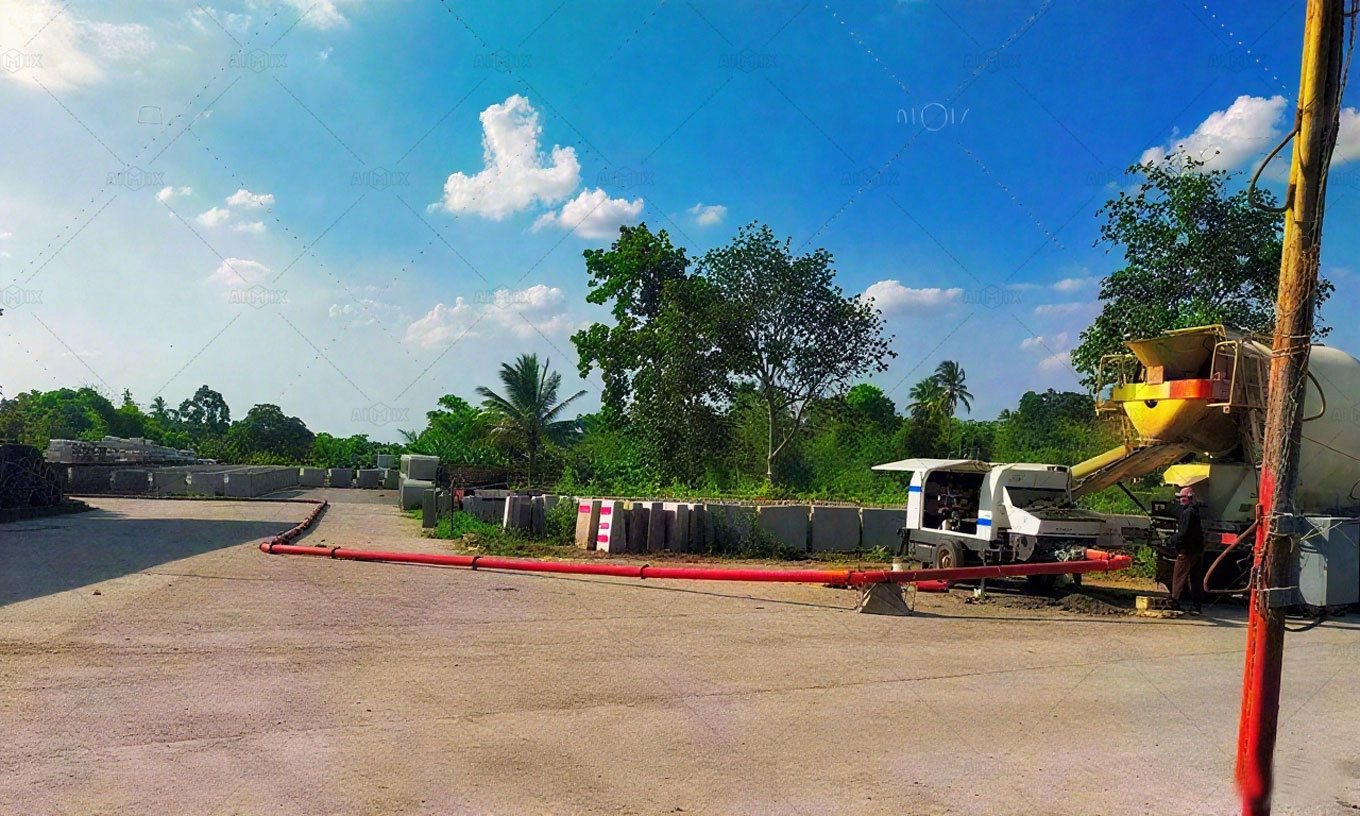
Equipment Options and Procurement Considerations in Malaysia
Trailer Pump or Integrated Mixer Pump?
A trailer concrete pump is generally suitable when concrete is supplied by a batching plant or ready-mix trucks. It focuses on pumping and can support relatively large placement operations when the concrete supply and pipeline arrangement are properly matched.
A concrete mixer pump for sale combines mixing and pumping functions in one machine. It may be more appropriate for smaller construction areas, remote work zones, or projects where a separate concrete supply arrangement is difficult to organise. For large warehouse floor pours and extensive container yard paving, contractors should assess whether its production capacity can meet the required placement volume.
Check the Complete Supply and Support Package
Before purchasing, contractors should confirm the pump model, rated output, maximum aggregate size, pumping pressure, pipeline accessories, wear parts, warranty, and spare parts availability. Local technical support and operator training are also important considerations for equipment expected to work across multiple construction phases.
For Port Klang warehouse projects, the most suitable trailer pump is one that matches the concrete mix, site geometry, and placement schedule. Careful equipment selection and pipeline planning can help contractors handle floor slabs, loading docks, equipment foundations, container yard pavements, and drainage works with a more coordinated concrete supply process.