Concrete demand on Malaysian construction projects rarely remains perfectly uniform throughout the working day or across the entire project cycle. Large foundations, bridge decks, high-rise slabs, industrial floors, and infrastructure pours can create sharp periods of elevated concrete consumption, followed by quieter production intervals. These demand peaks place different requirements on batching equipment than a project with steady, predictable output. Contractors therefore need to examine not only the nominal capacity of a plant, but also how reliably the system can respond when several concrete trucks require loading within a compressed time window. The selection of a manufacturer should consequently consider production stability, batching accuracy, configuration flexibility, maintenance support, and the ability to match the plant with the project’s actual demand profile.
In Malaysia, this consideration becomes particularly relevant where projects operate in dense urban environments, industrial corridors, rapidly developing residential areas, or infrastructure zones with restricted delivery schedules. A stationary concrete batching plant that performs adequately during average demand may experience operational pressure during peak periods. Conversely, an oversized installation can introduce unnecessary complexity when demand remains low for much of the project. Understanding the rhythm of concrete consumption provides a more useful basis for manufacturer selection than relying on capacity figures alone.
Identify How Concrete Demand Peaks Affect Plant Requirements
Short High-Demand Periods Require Consistent Production
Peak demand occurs when a large volume of concrete must be produced within a limited period. A foundation pour, for example, may require continuous concrete supply for several hours, while a large slab can generate a concentrated demand that is considerably higher than the project’s daily average. During these periods, interruptions in batching can quickly affect mixer-truck dispatch and concrete placement.
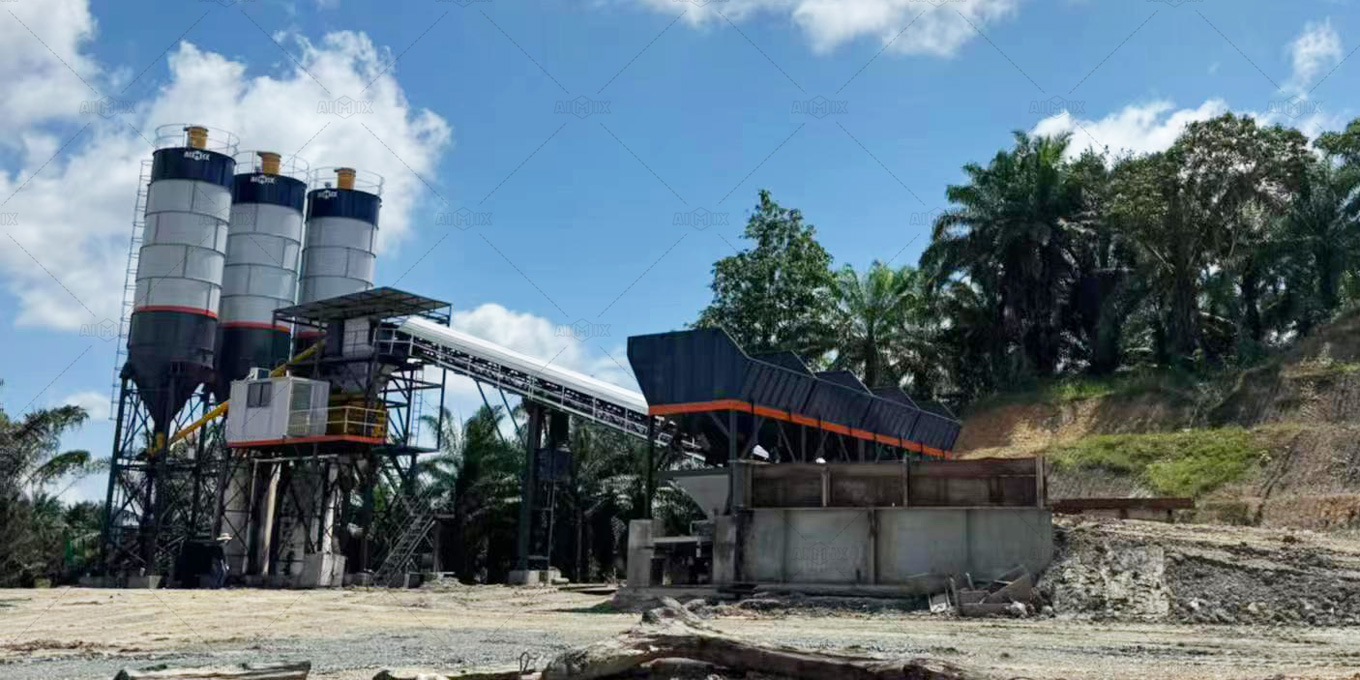
A Stationary Concrete Batching Plant should therefore be evaluated according to its ability to maintain stable production under sustained demand rather than its headline output alone. Mixing efficiency, aggregate dosing, cement weighing, water measurement, control logic, and discharge speed all contribute to the practical production rhythm.
Average Demand and Peak Demand Should Be Separated
Contractors should distinguish between the project’s average hourly requirement and its maximum short-term requirement. A project may consume moderate volumes most of the week but require a much higher output during scheduled structural pours. This distinction helps prevent capacity from being selected solely around normal operating conditions.
Peak Duration Influences the Appropriate Capacity
A short fifteen-minute surge is different from a six-hour continuous pour. The longer the peak period, the more important production stability, aggregate replenishment, component durability, and operator workflow become. Manufacturer discussions should therefore include expected peak duration rather than only a target cubic-metre-per-hour figure.
Evaluate the Manufacturer Beyond the Plant Capacity
Equipment Configuration Should Reflect the Project Demand Pattern
Different projects require different combinations of storage bins, aggregate compartments, cement silos, weighing systems, mixers, conveyors, and control systems. A manufacturer should be able to configure the plant around the project’s material flow instead of simply offering a fixed equipment package.
When selecting a stationary concrete batching plant manufacturer in Malaysia, contractors can examine whether the supplier provides capacity options that correspond with both normal and peak production requirements. The manufacturer should also be able to explain how the selected configuration will behave when demand rises, rather than presenting capacity as an isolated specification.
Batching Accuracy Becomes More Important During Peak Production
High production rates do not remove the need for accurate weighing. In fact, repeated batching during a major pour makes consistency particularly important because small deviations can accumulate across a large concrete volume. Aggregate, cement, water, and admixture systems should work in a coordinated sequence so that each batch follows the intended mix design.
Control Systems Can Help Maintain Production Rhythm
An effective control system coordinates weighing, mixing, discharge, and batching cycles while providing operators with information about the production process. Clear monitoring can help identify interruptions before they become prolonged stoppages. For projects with demanding pour schedules, this operational visibility can be as important as nominal plant capacity.
Consider Malaysia-Specific Site and Supply Conditions
Material Supply Must Support Peak Production
A plant cannot maintain high output if aggregate, cement, water, or admixtures cannot reach the site at the required rate. Contractors should therefore assess storage capacity alongside production capacity. Larger stockpiles or additional silos may be appropriate where delivery intervals are long or where traffic conditions can disrupt material replenishment.
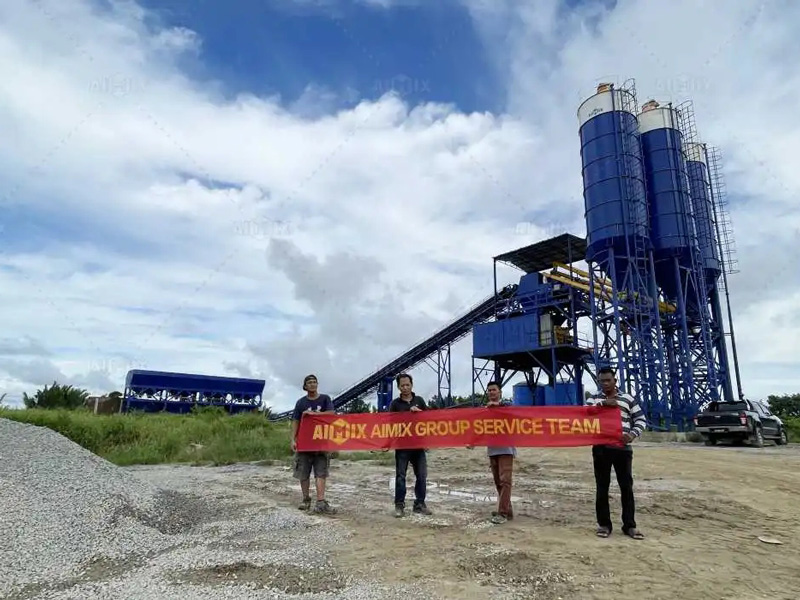
A ready mix concrete batch plant in Malaysia should consequently be considered as part of a wider material-supply chain. The plant location, aggregate delivery route, cement storage, truck circulation, and concrete dispatch sequence should work together. Otherwise, a high-capacity batching system may spend part of its operating time waiting for materials.
Urban Sites May Require More Controlled Truck Circulation
In Kuala Lumpur and other developed construction zones, the plant’s internal logistics can become a constraint when several mixer trucks arrive simultaneously. A suitable layout should provide adequate space for truck positioning, loading, turning, and departure without creating interference with aggregate delivery or other construction activities.
Plant Layout Can Affect Peak-Hour Efficiency
During ordinary production, minor layout inefficiencies may have little visible impact. During a major concrete pour, however, repeated vehicle movements can create cumulative delays. The manufacturer should therefore be involved in evaluating access, hopper positioning, conveyor routes, silo placement, and truck loading arrangements before installation.
Compare Lifecycle Support Before Selecting a Manufacturer
Maintenance Response Matters During Critical Pours
A concrete plant may operate for years, but certain maintenance issues become especially consequential when a major pour is scheduled. Contractors should investigate spare-parts availability, technical response procedures, maintenance guidance, and the manufacturer’s ability to support the installed configuration.
The value of a concrete batching plant in Malaysia is therefore connected not only to its initial production capability but also to its operational continuity over the project lifecycle. A manufacturer with a clear support structure can help contractors plan maintenance without unnecessarily disrupting scheduled production.
Manufacturer Experience Should Be Matched to the Intended Application
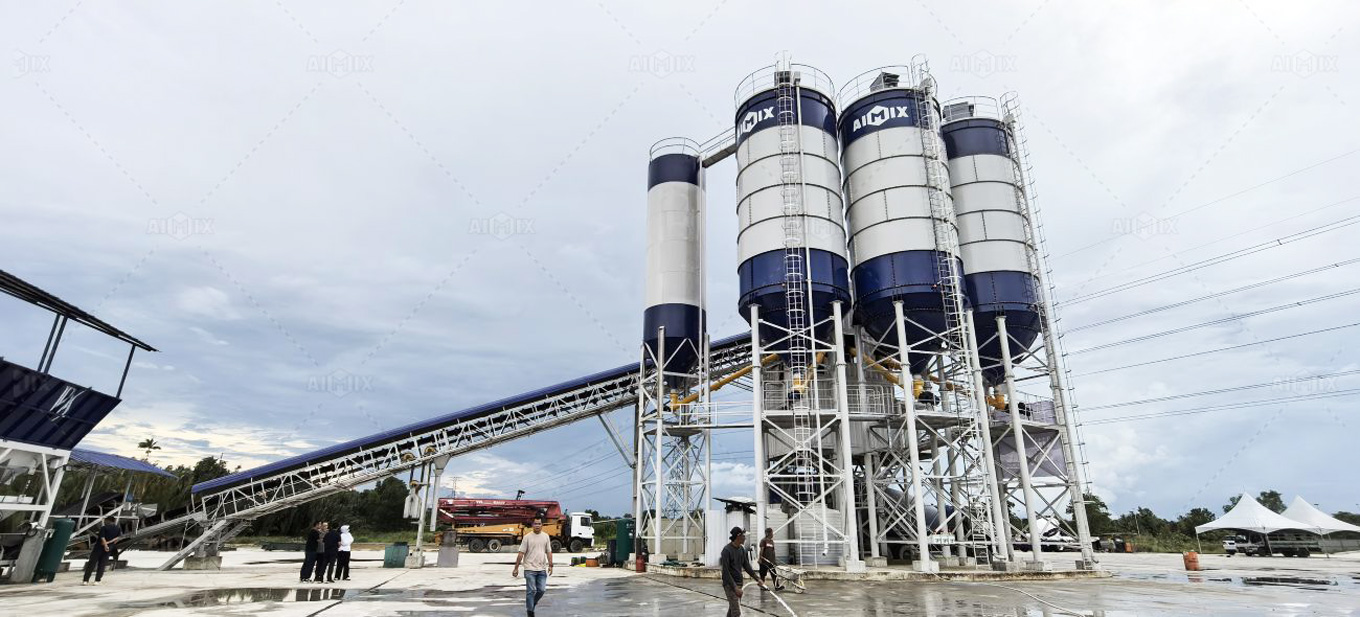
Supplier evaluation should include more than the number of plants sold. Contractors can examine whether the manufacturer has experience with comparable production capacities, concrete applications, project durations, automation requirements, and site constraints. Reference projects can also reveal how the equipment performs under actual operating conditions rather than controlled specifications.
The Right Manufacturer Should Help Translate Demand Into Equipment
The central question is not simply how many cubic metres a plant can theoretically produce per hour. It is whether the entire system can sustain the project’s concrete rhythm when demand rises sharply. Capacity, mixer cycle time, material storage, weighing accuracy, truck dispatch, maintenance access, automation, and technical support all contribute to that outcome.
For Malaysian contractors, concrete demand peaks provide a practical framework for comparing ready mix batching plant manufacturers. A suitable selection begins by mapping average demand, peak volume, peak duration, delivery intervals, and site logistics. The manufacturer can then be assessed according to how well its plant configuration addresses those conditions. This approach avoids choosing equipment solely from a capacity table and instead connects plant design with the actual cadence of concrete production and placement.